
A good leather sofa can last for decades. In Miami it has to work a little harder for that: strong sun through big windows, humid air, air conditioning that runs most of the year, and a steady supply of sunscreen and beach sand. None of this ruins leather overnight, but together it explains why so many sofas here fade, dry out and crack years before they should.
The good news is that most leather care takes a few minutes a week and the right two products. Below is the routine we recommend to our customers, plus the signs that tell you a piece needs more than cleaning.
1. Find out what kind of leather you have
Every care decision depends on the finish, so start here. Check the manufacturer’s tag or paperwork, or put a single drop of water on a hidden spot, such as the back or under a cushion.
- Finished (pigmented) leather. The water drop sits on top. This is the most common leather on sofas, sectionals and car seats. It has a protective color coat and is the easiest to look after.
- Semi-aniline leather. The drop soaks in slowly. It has a light protective layer, so it looks more natural but stains a little more easily.
- Aniline leather. The drop darkens the leather almost at once. It has little or no protection, feels very soft and absorbs spills, oils and sunlight quickly. Always spot-test products on it.
- Bonded leather. Leather fibers pressed together with a coated surface. It often peels in flakes after a few years, and that surface can’t be restored the way genuine leather can.
Whatever you have, test any new product on a hidden area first and let it dry fully before you judge the result.
2. Clean gently and often
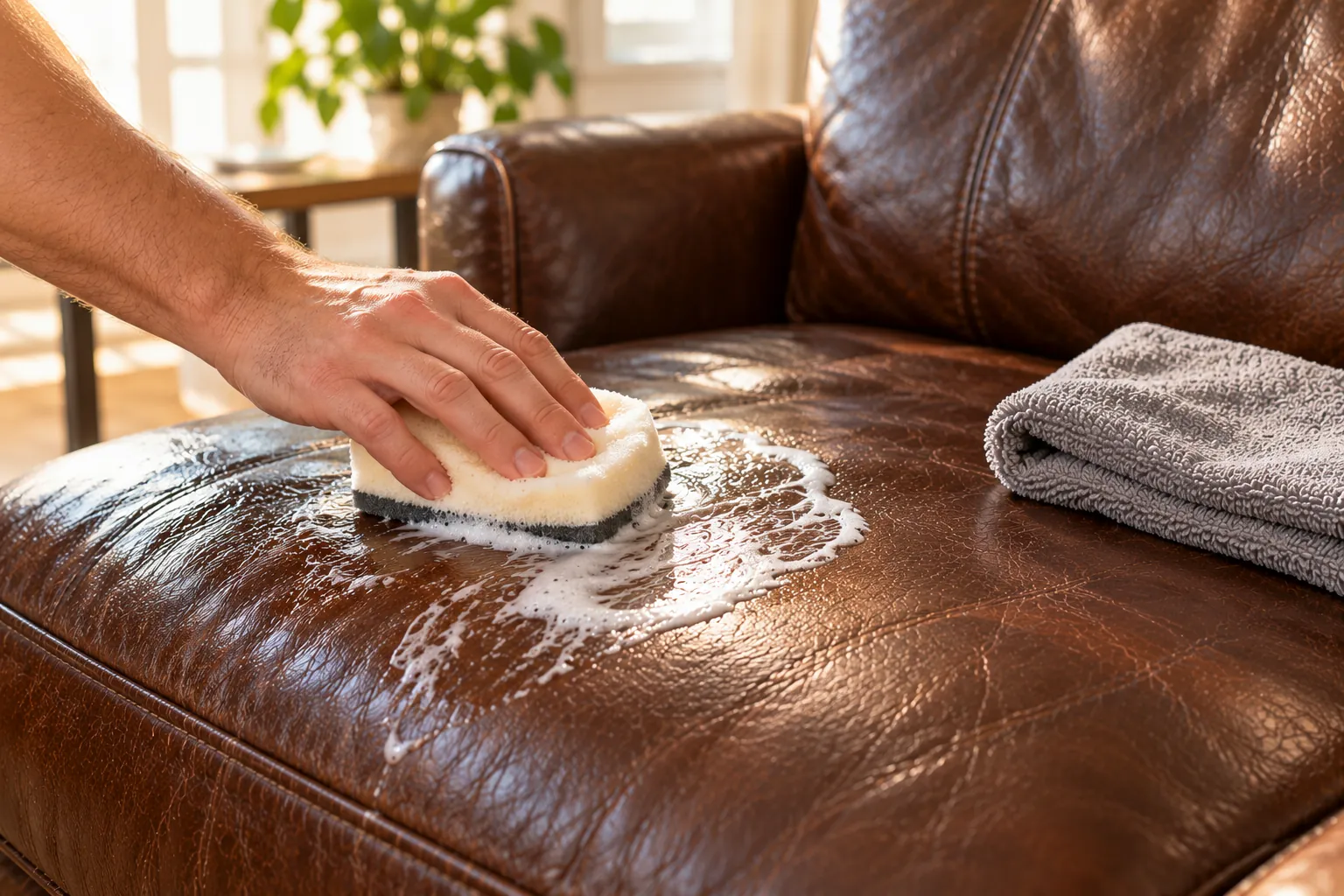
Dust, sand and body oils build up in the grain and act like fine sandpaper every time someone sits down. Once a week, wipe the sofa with a dry microfiber cloth and run a soft brush attachment of your vacuum along the seams and under the cushions, where sand collects.
Every few months, or whenever the seats start to look dull or feel slightly sticky, do a deeper clean with a pH-balanced foaming leather cleaner. Foam is easier to control than a spray: put it on a soft sponge, work one small section at a time, then wipe the dirt away with a clean microfiber cloth. Don’t soak the leather and don’t scrub.
Things to keep away from leather:
- all-purpose sprays, glass cleaners and anything with bleach or ammonia;
- vinegar, dish soap mixes and baby wipes, which leave residue or slowly dry the finish;
- melamine “magic” sponges, which work like an abrasive and remove the color coat.
For spills, blot right away with a dry cloth, working from the outside of the spot toward the center. Rubbing spreads the liquid and pushes it deeper.
3. Watch out for sunscreen, bug spray and hair products
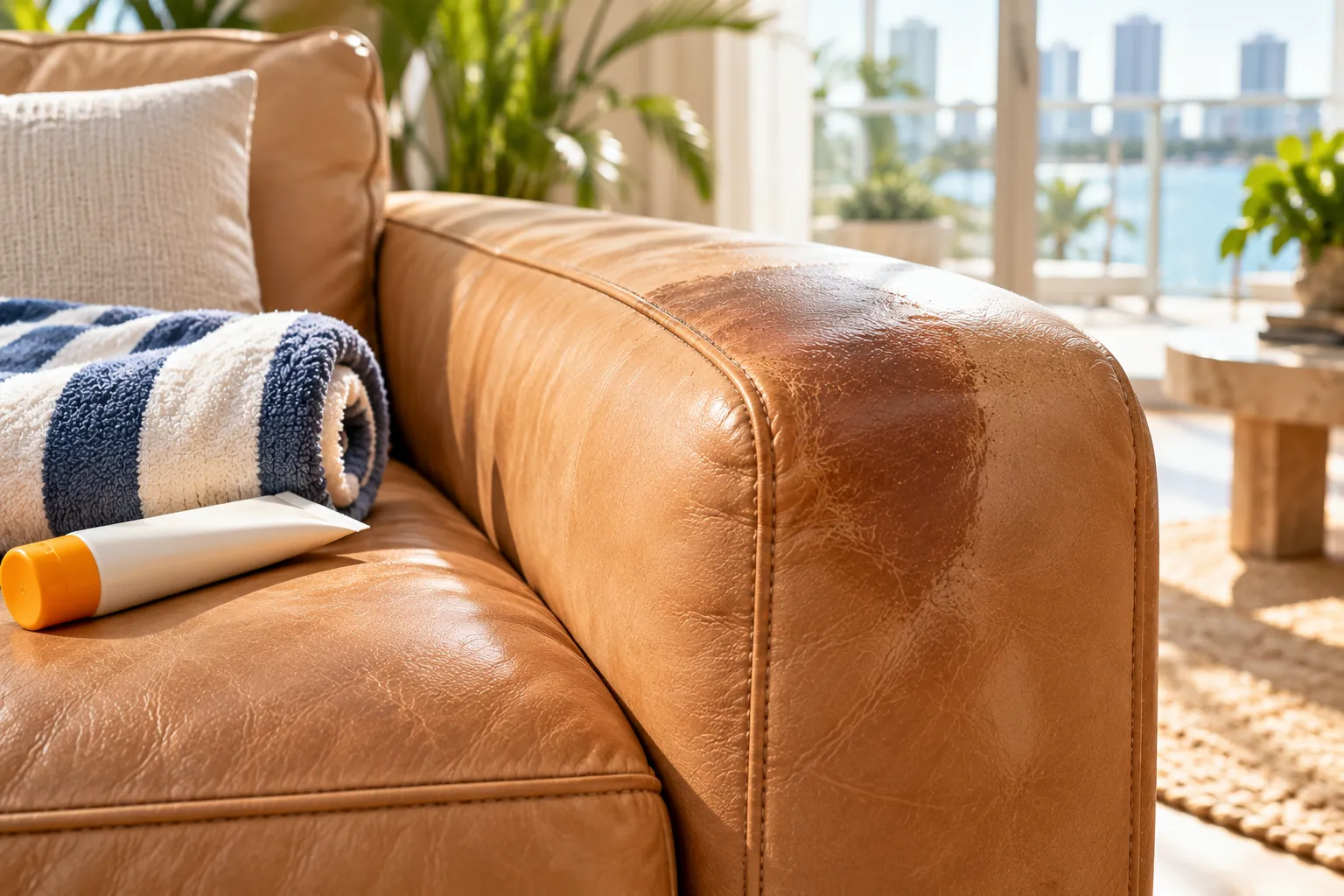
This is the most Miami-specific problem we see. Sunscreen, insect repellent, body lotion and hair oil transfer to headrests, armrests and the front edge of seat cushions. Over time they darken the leather, make the surface tacky and can soften the protective finish until it starts to wear through.
You don’t need to change your lifestyle. Just give the favorite spots a quick wipe with a slightly damp microfiber cloth after beach or pool days, and clean them with leather cleaner more often than the rest of the sofa. A throw on the favorite seat during summer also helps.
4. Condition in thin layers, only after cleaning
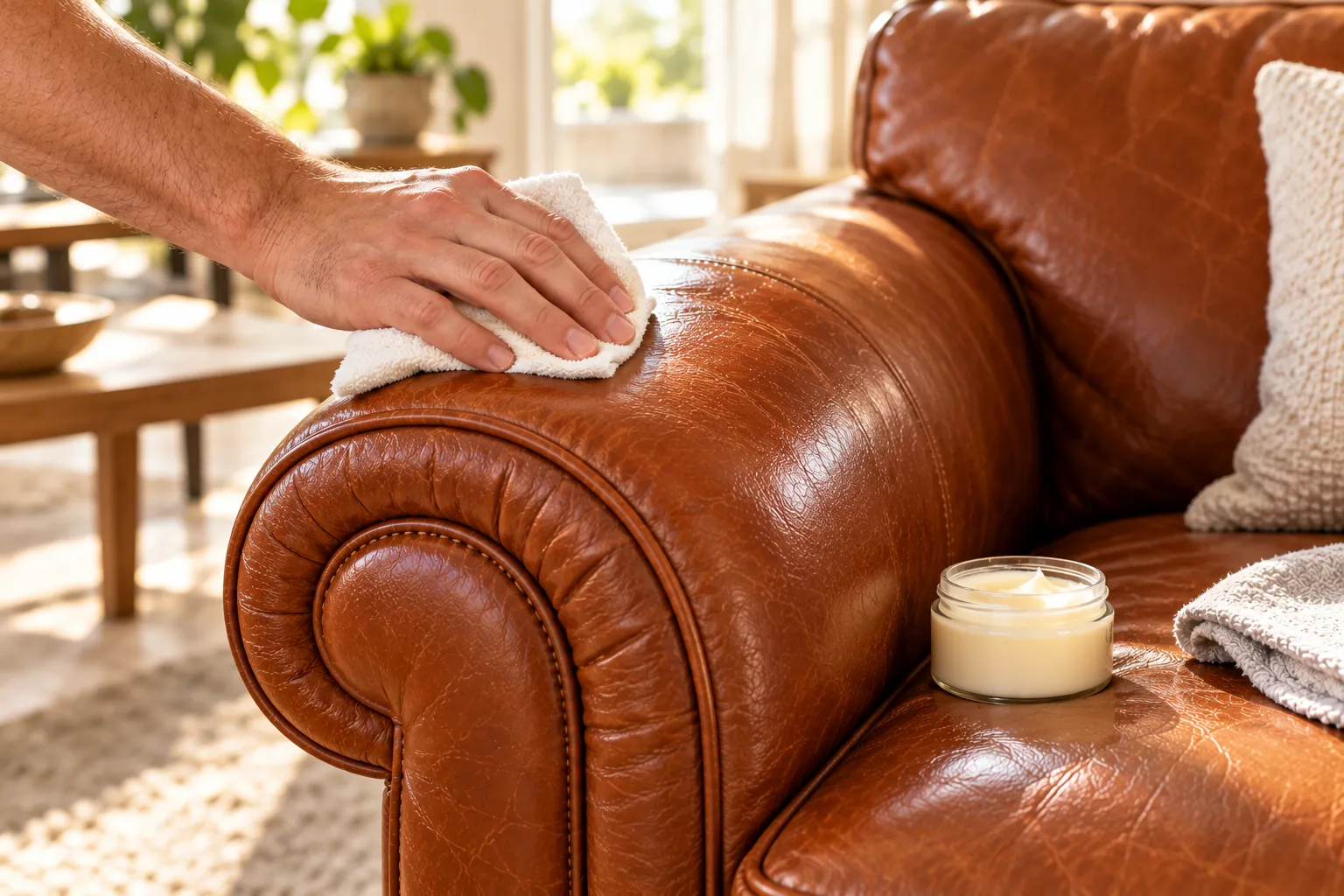
Conditioning puts back some of the oils that leather loses to sun, heat and dry air-conditioned rooms, and keeps it soft. Always clean first: conditioner applied over dirt seals the dirt in.
Use a product made for furniture leather, such as a leather conditioner balm. Massage a thin layer into the clean leather with a soft cloth, let it absorb, then buff lightly. If the surface still feels greasy afterwards, you used too much. For furniture in daily use, conditioning every three to six months is usually enough; follow the manufacturer’s advice if it says otherwise.
Skip olive oil, coconut oil, mink oil and petroleum jelly. They can darken leather unevenly, turn rancid in the heat and attract dirt. If you’d rather not pick products one by one, the Balsamio leather care kit pairs a cleaner and a conditioner that are meant to be used together.
One honest limit: conditioner keeps healthy leather healthy, but it can’t close cracks, bring back lost color or reattach a peeling finish. Those need repair.
5. Protect leather from sun, vents and humidity
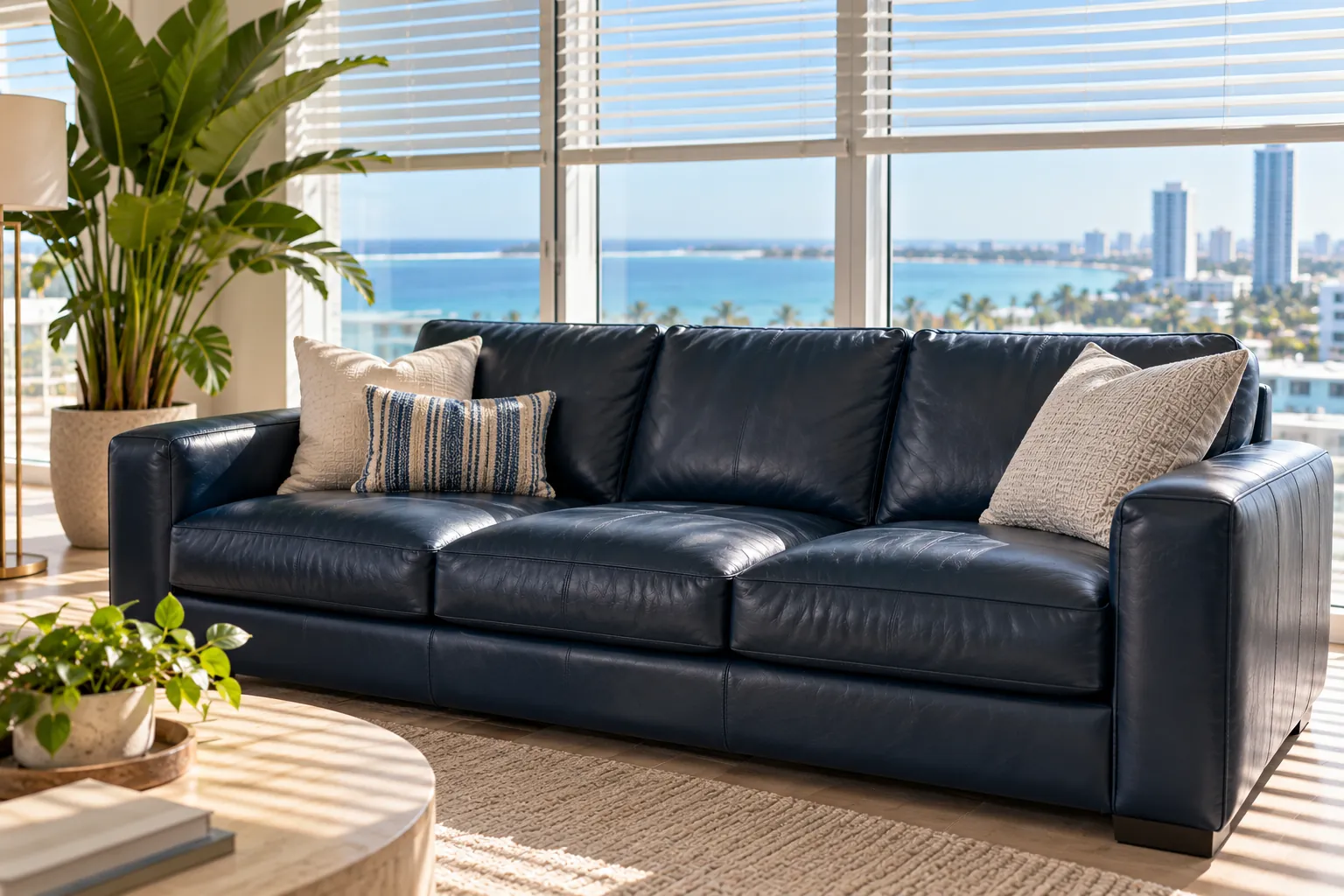
Sun. Direct sunlight is the main reason leather fades here. If the sofa sits by a window, use blinds or sheer curtains during the brightest hours, or consider UV-filtering window film. Swapping seat cushions around now and then helps them fade evenly instead of leaving one pale spot.
Air conditioning. Don’t place leather right under or in front of an AC vent. The constant flow of cold, dry air pulls moisture out of the surface, and those areas tend to dry out and crack first.
Humidity and empty homes. If a condo stays closed for weeks during summer with the air conditioning off, humidity can lead to mildew on leather. Keep the AC or a dehumidifier running at a moderate setting while you’re away. If you do find mildew spots, take the piece outside or open the windows, wipe them with leather cleaner, let the leather dry completely and condition afterwards. Never use bleach.
6. Learn the early signs of damage
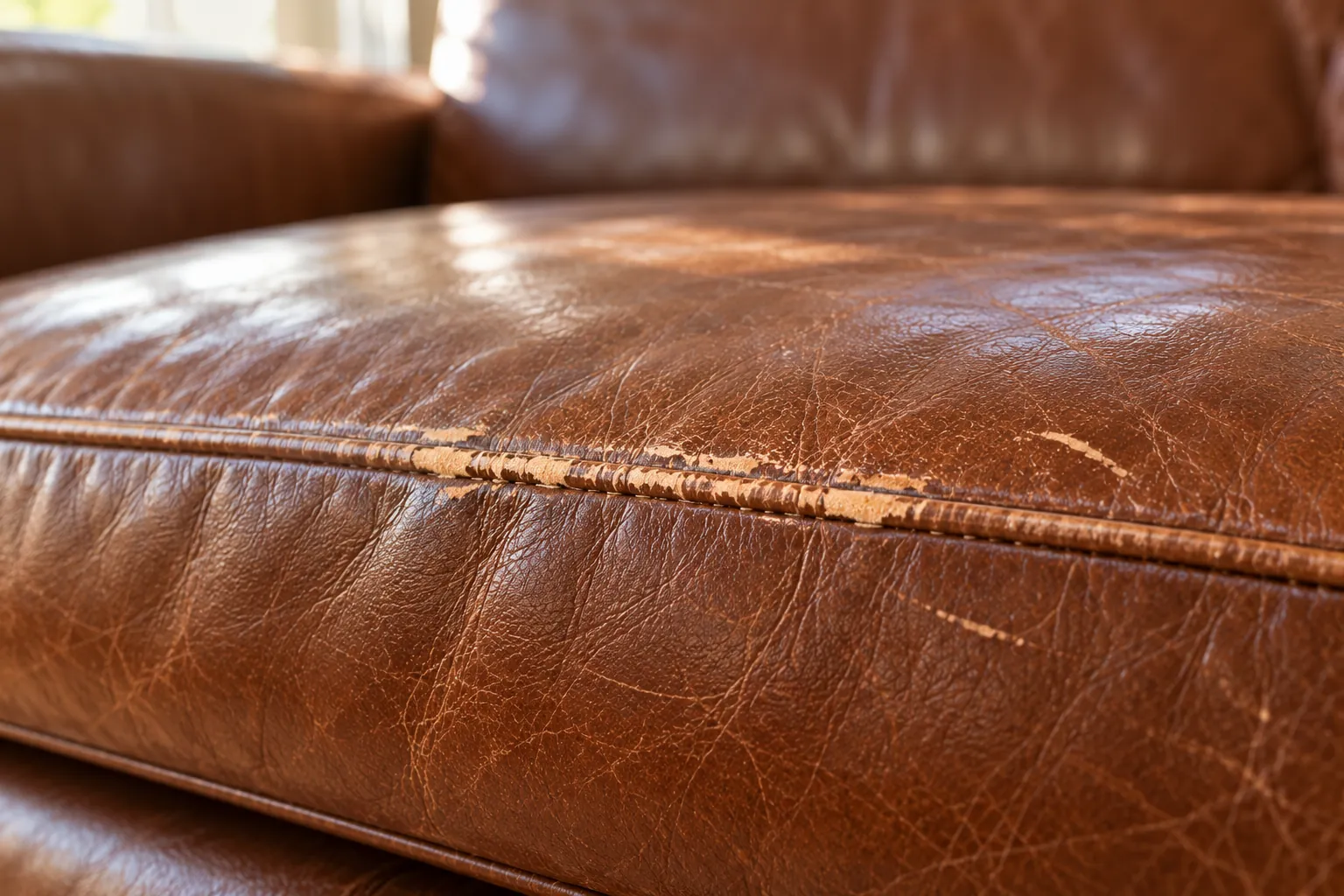
Leather rarely fails all at once. These are the changes worth catching early:
- Fading: the top of the backrest or the cushion nearest the window is lighter than the rest.
- Fine surface lines: small cracks on armrests and seat edges, where the leather flexes most.
- Worn color: the color rubbed off on edges and seams, showing lighter leather underneath.
- Dark, shiny patches: body oils and lotion soaked into headrests and armrests.
- Scratches and punctures: from pets, keys, belt buckles or toys.
Light scuffs often improve with cleaning and conditioning. Cracks, color loss, tears and deep scratches won’t, and they get bigger with use.
7. Repair or replace?
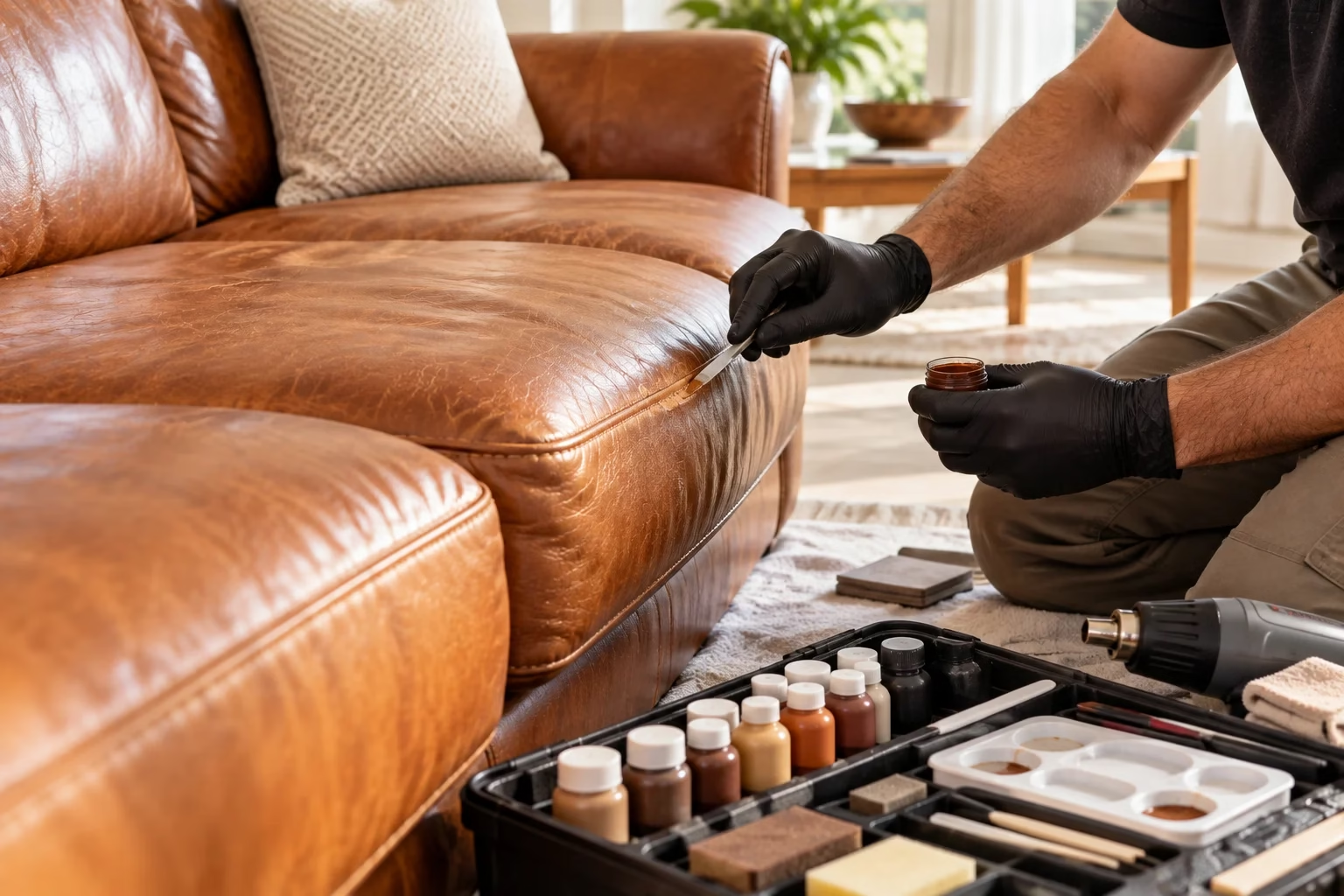
If the frame is solid and the cushions still hold their shape, repairing the leather usually makes more sense than buying a new sofa. What a professional repair involves depends on the damage:
- Scuffs, worn edges and fading: surface preparation and color restoration matched to the original shade. See leather recoloring and redye.
- Cracks and cat scratches: flexible filler, color and a protective topcoat. See leather furniture repair.
- Dirt, oils and a dull, dry surface: professional deep cleaning and conditioning. See leather cleaning and conditioning.
Repair isn’t always the answer. Bonded leather that is peeling all over, leather that tears when you press it, or a broken frame usually mean replacement or reupholstery. A quick look at photos is normally enough to tell which side your piece is on.
8. A simple care schedule
| How often | What to do |
|---|---|
| Weekly | Dust with a dry microfiber cloth; vacuum seams and under cushions. |
| After beach or pool days | Wipe headrests, armrests and seat edges with a slightly damp cloth. |
| Monthly | Look over armrests, seat edges and the side facing the window for fading, cracks or dark patches. |
| Every 3–6 months | Clean with a leather cleaner, then apply a thin layer of conditioner. |
| Once a year | Check the whole piece in daylight and deal with any cracks or color loss before they spread. |
Heavily used furniture, light-colored leather and pieces in sunny rooms may need the deeper steps more often.
Frequently asked questions
How often should I clean a leather sofa?
Dust it weekly and do a deeper clean with a leather cleaner every three to six months, or sooner if it looks dull or feels sticky. Clean spills right away.
Can I use baby wipes or vinegar on leather?
It’s better not to. Baby wipes and vinegar solutions can leave residue and dry out the finish over time. Use a cleaner made for leather.
Will conditioner fix cracked leather?
No. Conditioner helps prevent cracks and can make very fine lines less visible, but real cracks need filler, color and a topcoat.
How do I stop my leather sofa from fading in the sun?
Limit direct sunlight with blinds, curtains or UV-filtering film, rotate the cushions, and keep the leather clean and conditioned. Faded areas can be brought back with professional recoloring.
Is it worth repairing an old leather sofa?
Often, yes, if the frame and cushions are in good shape and the leather is genuine. Bonded leather that is peeling everywhere is usually not worth restoring.
Not sure if your sofa can be saved? Send us a few photos of the damage through the free quote form. We’ll reply with a price, usually on the same day during working hours. We come to you anywhere in Miami-Dade.